
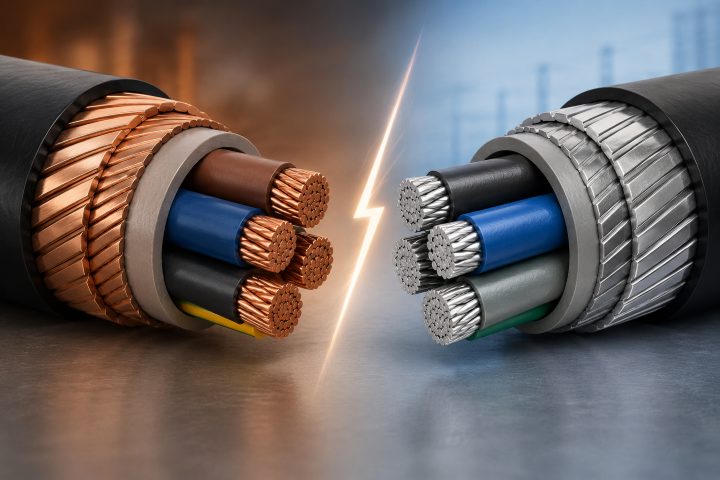
Copper Armoured Cable vs Aluminium Cable: Which One Should You Choose?
The choice of cable is crucial for safety, efficiency and longevity of an electrical installation. When it comes to choosing between copper armoured cable and aluminium cable for an industrial project, commercial installation or large infrastructure installation, there are benefits to be gained from understanding the difference between them. Many buyers also look for an expert armoured cable supplier or a reliable wire and cable supplier before selecting the option that best suits them.
Understanding Copper Armoured Cable
A copper armoured cable has copper conductors enclosed in a strong steel armour. Copper is a very good conductor of electricity and thus can carry a greater amount of electricity with less loss of energy. It also provides enhanced flexibility, simplifying its installation in numerous settings. The copper armoured cable is corrosion-resistant and high-strength, making it suitable for use in factories, commercial buildings, underground power distribution, and high-power electrical systems.
Understanding Aluminium Cable
Aluminium is used for the conductors in aluminium cable because it is much lighter than copper. It is lighter and is thus more cost-efficient to transport and install. But aluminium is less conductive than copper, and therefore requires a larger-sized cable to provide the same electrical conductivity. A good power cable manufacturer will have more than one choice of power cable, both copper and aluminium.
Differences Between Copper and Aluminium Cables
Copper armoured cable's greatest benefit is the high conductivity. It suffers from less voltage drop, runs more efficiently at higher loads, and has a longer life. Copper is further less affected by mechanical stress and repeated bending.
The other cable type is aluminium, which is cheaper and lighter. It is best for projects where budget and weight reduction are important factors. But the coefficient of expansion and contraction of aluminium is high, which could mean further maintenance work in the future. Many power cable suppliers recommend considering the installation site before choosing a power cable.
Which Cable Should You Get?
In cases where high performance, durability, and reliability in power transmission are required, copper armoured cable is often the chosen cable. It works well in industrial plants, data centres, manufacturing units and commercial buildings where power reliability is crucial.
For situations where the lower the cost of the project, the better, and the installation is planned around that, then aluminium cable may be a feasible solution. It's important to seek advice from a trusted armoured cable supplier, wire and cable supplier or a seasoned power cable manufacturer to ensure that the cable is safe for use and fits the requirements.
Final Thoughts
No one cable is suitable for all applications. The correct one to select is based on several factors: electrical load, installation space, maintenance requirements and budget. Knowing these will help engineers, contractors and buyers choose the right one for long-term performance.
Electrotech offers valuable resources on its website for readers seeking to learn more about the various types of cables and industry standards, enabling them to choose the right cable for their needs.