
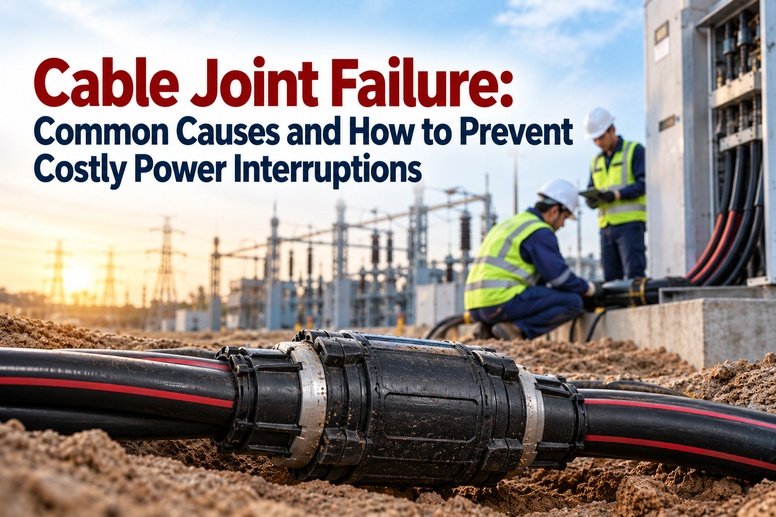
Cable Joint Failure: Common Causes and How to Prevent Costly Power Interruptions
Reliable electrical connections are essential for keeping homes, commercial buildings, factories, and infrastructure running safely. One weak point that can create serious trouble is a cable joint. When a joint is poorly installed, exposed to harsh conditions, or not maintained properly, it can gradually deteriorate and eventually cause a cable joint failure.
A failed cable joint may lead to overheating, short circuits, insulation damage, equipment downtime, or unexpected power interruptions. In industrial and commercial settings, even a short outage can affect production, operations, and revenue. Understanding the common cable joint failure causes can help electrical professionals identify risks early and take preventive measures.
From selecting the right jointing kit to following proper installation practices, effective cable jointing plays an important role in maintaining a dependable electrical network. This guide explains why cable joints fail, how to identify warning signs, and what can be done to prevent costly electrical problems.
What Is Cable Joint Failure?
Cable joint failure occurs when a connection between two or more electrical cables loses its mechanical, electrical, or insulation integrity. A properly made joint should provide a secure connection while protecting the conductor and insulation from moisture, heat, mechanical stress, and other environmental factors.
When the joint begins to deteriorate, electrical resistance can increase. This may generate excessive heat and further damage the connection, creating a cycle that can eventually result in complete failure.
Electrical cable joints are particularly important in power distribution systems where cables need to be extended, repaired, or connected to different sections of a network.
Common Cable Joint Failure Causes
Several factors can contribute to cable joint problems. Identifying these risks during installation and maintenance can significantly improve the service life of a cable system.
1. Poor Installation Practices
Incorrect preparation of the cable ends, improper conductor connection, inadequate insulation, or incorrect positioning of jointing components can weaken the entire connection.
Even a high-quality jointing kit cannot compensate for poor installation. Electrical professionals should carefully follow the manufacturer's installation instructions and recommended procedures.
2. Moisture and Water Ingress
Moisture is one of the major threats to cable joints, particularly for outdoor, underground, and industrial installations. If water enters the joint, it can affect insulation and promote corrosion.
Over time, moisture can reduce insulation performance and increase the possibility of electrical faults.
3. Excessive Heat
Loose connections and high electrical resistance can cause localized heating. If the temperature continues to rise, insulation materials may deteriorate and the joint can become increasingly vulnerable.
Overloading the cable beyond its designed capacity can also contribute to excessive temperature.
4. Incorrect Jointing Materials
Using a jointing solution that is unsuitable for the cable type, voltage level, conductor material, or installation environment can result in premature failure.
The selected components should be compatible with the cable specifications and operating conditions.
5. Mechanical Stress
Cables and their joints may experience tension, vibration, bending, impact, or movement. If the joint does not have adequate mechanical protection, repeated stress can damage the connection or insulation.
This is especially important in industrial environments and locations where cables are exposed to regular movement.
6. Corrosion
Metal components inside a joint can corrode when exposed to moisture, chemicals, or unsuitable environmental conditions. Corrosion can increase electrical resistance and weaken the connection.
Proper sealing and suitable materials can help reduce this risk.
Warning Signs of a Failing Cable Joint
Recognising early warning signs can help prevent an unexpected outage. Some common indicators include:
- Unusual heating around the joint
- Discoloration or visible burning marks
- Repeated tripping of protective devices
- Intermittent power interruptions
- Unusual smells from cable connections
- Cracked, swollen, or damaged insulation
- Unstable electrical performance
Thermal inspection and routine electrical testing can help identify developing problems before they become major failures.
How to Prevent Cable Joint Failure
Preventive measures should begin before the joint is installed and continue throughout its service life.
Choose the Right Jointing Solution
Start by selecting a suitable jointing system based on cable construction, voltage rating, conductor type, installation conditions, and application requirements. Compatibility is essential for long-term performance.
Follow Correct Installation Procedures
Cable ends should be prepared carefully, and all connection components should be installed according to recommended specifications. Proper torque, insulation, sealing, and positioning are important for a reliable joint.
Protect Joints from Environmental Conditions
Where joints are exposed to moisture, chemicals, heat, dust, or mechanical impact, appropriate protective measures should be used. Underground and outdoor applications require particular attention to sealing and environmental protection.
Conduct Regular Cable Joint Maintenance
Routine cable joint maintenance can help identify developing issues before they result in failure. Depending on the installation, maintenance may include visual inspections, thermal imaging, insulation testing, and checking for signs of corrosion or overheating.
Avoid Overloading
Electrical systems should operate within the rated capacity of the cables and associated components. Persistent overloading can increase temperature and accelerate insulation deterioration.
Cable Jointing: Installation vs Maintenance
| Factor | During Cable Jointing | During Maintenance |
|---|---|---|
| Cable preparation | Ensure accurate stripping and preparation | Check for damage or deterioration |
| Connection | Follow specified connection procedure | Inspect for loose or damaged connections |
| Insulation | Ensure complete insulation and sealing | Look for cracks, moisture, or degradation |
| Environment | Protect against moisture and contamination | Check environmental exposure |
| Testing | Verify the completed joint | Conduct periodic electrical checks |
Both stages are important. A correctly installed joint still requires appropriate inspection and maintenance throughout its operating life.
Why Quality Matters in Electrical Cable Joints
A cable joint is more than simply a connection between two conductors. It becomes an important part of the electrical system and must maintain conductivity, insulation, mechanical strength, and environmental protection.
Using reliable components and following established installation practices can reduce the likelihood of premature failure. For critical electrical networks, selecting dependable cable jointing products can also help improve operational reliability and reduce unplanned maintenance.
How Electrotech Can Help
Electrotech provides solutions designed to support dependable electrical connections across different applications. With the right cable jointing products and proper installation practices, electrical professionals can build connections that are better prepared for demanding operating conditions.
Whether a project involves cable extension, repair, replacement, or new electrical infrastructure, choosing appropriate jointing solutions is an important step toward reducing cable joint failure and avoiding unnecessary power interruptions.
Conclusion
A cable joint failure can have consequences ranging from minor electrical disturbances to serious equipment damage and prolonged downtime. Poor installation, moisture, overheating, mechanical stress, corrosion, and unsuitable materials are among the most common cable joint failure causes.
The best approach is prevention. Selecting compatible products, carrying out proper cable jointing, protecting connections from environmental conditions, and following a consistent cable joint maintenance programme can significantly improve reliability.
For dependable electrical cable joints, work with quality products and follow proven installation and inspection practices. Explore Electrotech's cable jointing solutions to support safer, more reliable electrical connections.
Frequently Asked Questions (FAQ's)
1. What is cable joint failure?
Cable joint failure occurs when a cable connection loses its electrical, mechanical, or insulation integrity. It can result from poor installation, moisture, overheating, corrosion, mechanical stress, or incompatible jointing materials.
2. What are the main cable joint failure causes?
Common causes include incorrect installation, water ingress, excessive heat, loose connections, mechanical stress, corrosion, overloading, and the use of unsuitable cable jointing components.
3. How can cable joint failure be prevented?
Choose compatible jointing products, follow correct installation procedures, protect joints from moisture and mechanical damage, avoid overloading, and perform regular inspections and maintenance.
4. How often should cable joint maintenance be performed?
The maintenance frequency depends on the cable system, operating conditions, environment, and criticality of the installation. High-risk or critical systems may require more frequent inspections and testing.
5. Why is moisture dangerous for electrical cable joints?
Moisture can penetrate damaged or poorly sealed joints, causing corrosion and insulation deterioration. It can eventually reduce electrical performance and increase the risk of faults.